
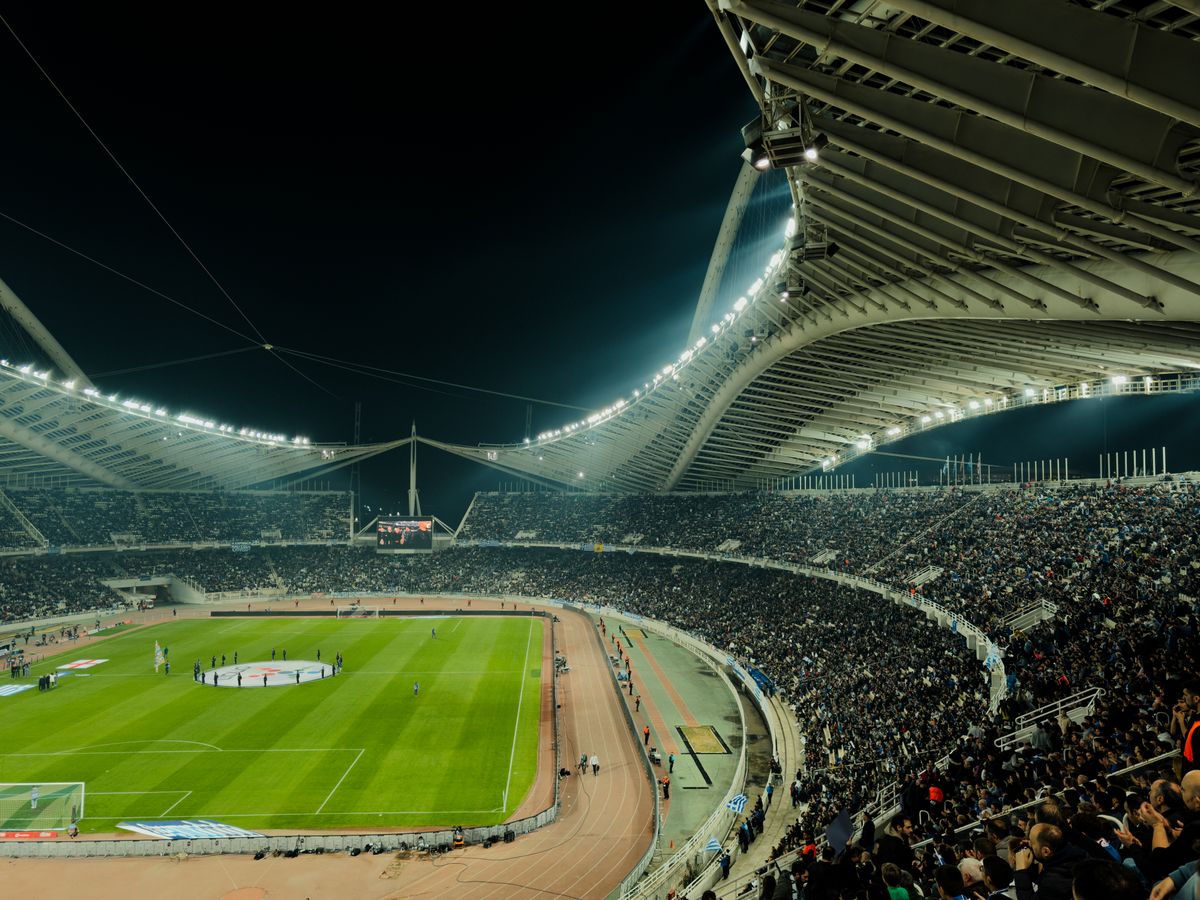
On Saturday night in Miami, England beat France 6–4 in the World Cup third-place play-off — ten goals, a Bukayo Saka hat-trick sealed from the penalty spot in the 87th minute, and England's best finish at a World Cup since they won it in 1966. The official match record is worth a look just to confirm it really happened.
We are a procurement and services business, not football pundits, and this blog normally sticks to supply chains, property, and IT. But our team watched that match the way most of the country did — and there is something in how it came about that is worth writing down, because it is the same thing we end up talking about in almost every leadership and team development session we run.
An office with two football hearts
A company with a parent in Lagos and a branch in London usually watches international football with divided loyalties. Not this summer. Nigeria's World Cup ended back in the qualifiers, beaten on penalties by DR Congo in Rabat after a 1–1 draw that still stings to think about. So when the tournament kicked off, the whole group's support settled in one place — and England, as it turned out, repaid it with their deepest run in sixty years.
A game nobody wants to play
Here is the honest context that makes Saturday remarkable. The third-place play-off is famously the fixture nobody wants. Both teams arrive three days after the worst night of their footballing lives — England had lost their semi-final to Argentina in midweek — and both would rather be anywhere else. Players are tired, hearts are somewhere between Tuesday's dressing room and the flight home, and history says these games are often flat.
Instead, England and France produced the highest-scoring World Cup match since 1982. England were 4–0 up at half-time through Declan Rice, Ezri Konsa, Saka, and Jude Bellingham. France came roaring back with three quick goals in the second half — Kylian Mbappé twice among the scorers on a night he became the World Cup's all-time leading goalscorer — and a comfortable evening turned into a genuine fight. England's answer was not to cling on. Saka stepped up in the 87th minute, with the game still alive, and put his penalty away for the hat-trick.
Three days after the defeat that ended their real dream, that group of players got up and played like the game mattered. That is the part worth studying.
The three days in between
In our consultancy and training work, the question that comes up more than any other — in different words, from different industries — is some version of this: how do we perform when things have not gone our way? The tender you spent months on goes to a competitor. The project you believed in gets cancelled. The promotion goes to someone else. And then, three days later, there is another piece of work in front of you that deserves your best.
What separates teams is rarely the setback itself. It is the interval after it. Some teams spend that interval relitigating the defeat; others reset and prepare for what is actually next. That reset is not a personality trait people either have or lack — it is a discipline: acknowledging the disappointment honestly, drawing the one or two lessons worth keeping, and then deliberately turning attention to the next fixture. It can be coached, and the teams that practise it are recognisably different to work with.
Saturday also carried a quieter, less comfortable lesson. At 4–0, the game looked finished — and within a spell of the second half it very much was not. Anyone who has watched a “won” contract, project, or client relationship come under sudden pressure knows exactly how that feels. Leads are not results. The job is done when it is done.
A summer worth remembering
Third place is a strange prize, and no England supporter will pretend it was the one they wanted on Tuesday night. But best finish since 1966 is not a consolation to wave away — it is the product of a squad that kept showing up, including for the game nobody wants to play. Congratulations to them. Our London office will remember this one for a long time; our colleagues in Lagos have already claimed partial credit for the support.
Back to procurement and paperwork next month. It was a good summer to be watching.
Building a team that responds well to setbacks?
Our consultancy & training work covers leadership, negotiation, and team development — including the unglamorous discipline of performing after disappointment. Practical programmes, no theory for theory's sake.